01
Sourcing
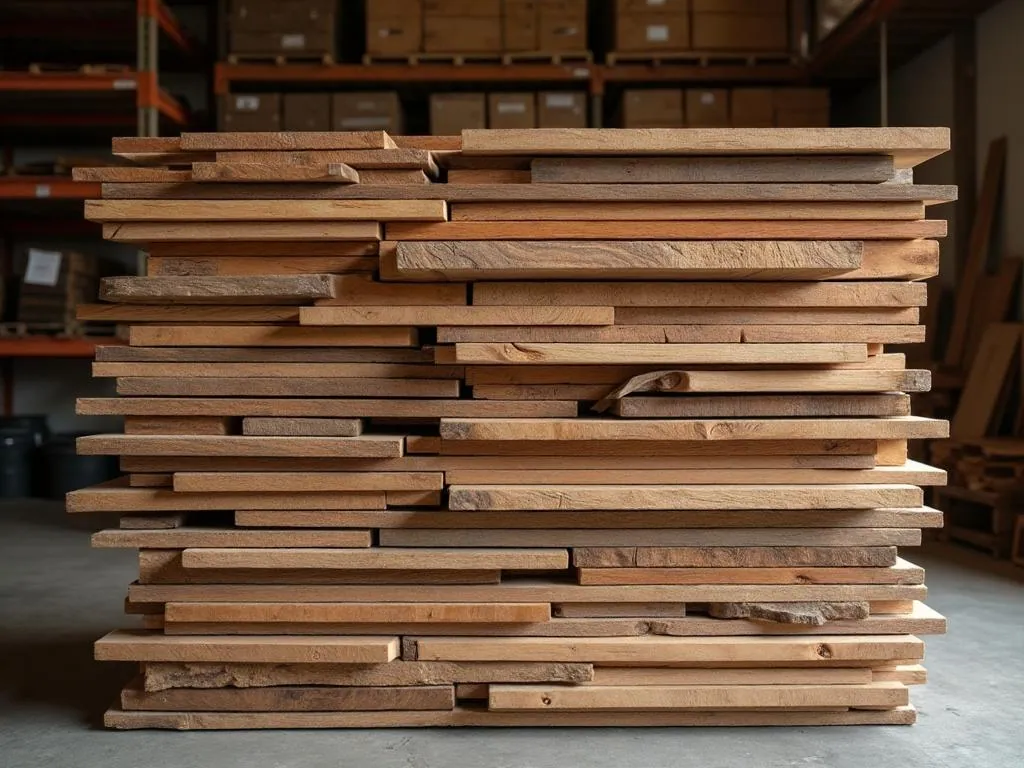
We work with Madison Mountain Reclaimed, who rescue timber from century-old American barns, mills and estates. Each board is chosen for grain, density and story — not for yield. We buy the building, then decide what it can become.
 HIGHER SELF
Living · Miami
Commission a table
Materials · Method · Time
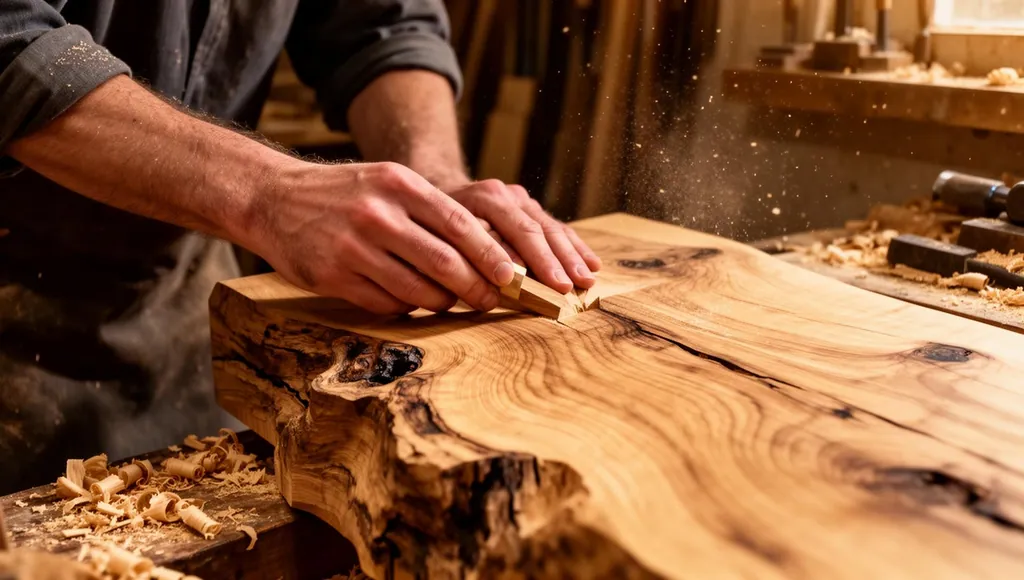
There is no production line. One slab, one table, one pair of hands from the first cut to the last coat of oil.
Why old wood
Old-growth American timber is denser, darker and more stable than anything milled today. The rings are tighter, the resin has crystallised, and the grain carries a scale that modern lumber cannot imitate.
It also carries a history: the marks of a barn door, the ghost of a hinge, a nail hole that becomes a detail. We keep those. A table with nothing to hide is usually a table with nothing to say.
Roughly eighty-five per cent of this material is still sent to landfill. Our work begins with the decision not to.
The process
Four stages, sixteen to twenty weeks, and a great deal of hand-sanding in between.
01
We work with Madison Mountain Reclaimed, who rescue timber from century-old American barns, mills and estates. Each board is chosen for grain, density and story — not for yield. We buy the building, then decide what it can become.
02
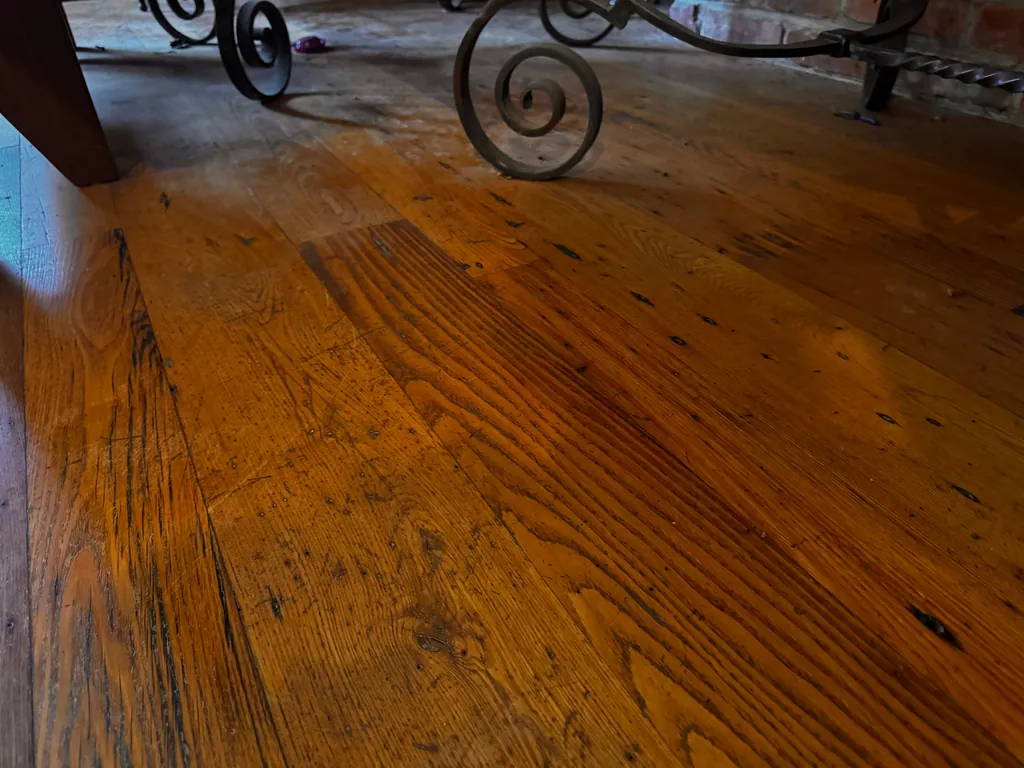
De-nailing, metal detection, cleaning and kiln-drying to a stable eight per cent moisture. Cracks are stabilised with butterfly keys in contrasting wood; voids are left open where they add character.
03
Live edges are kept. Channels and inlays are routed by hand, copper is hammered and fitted, and the steel base is welded, blackened and levelled. Joinery is traditional where it shows and hidden where it does not.
04
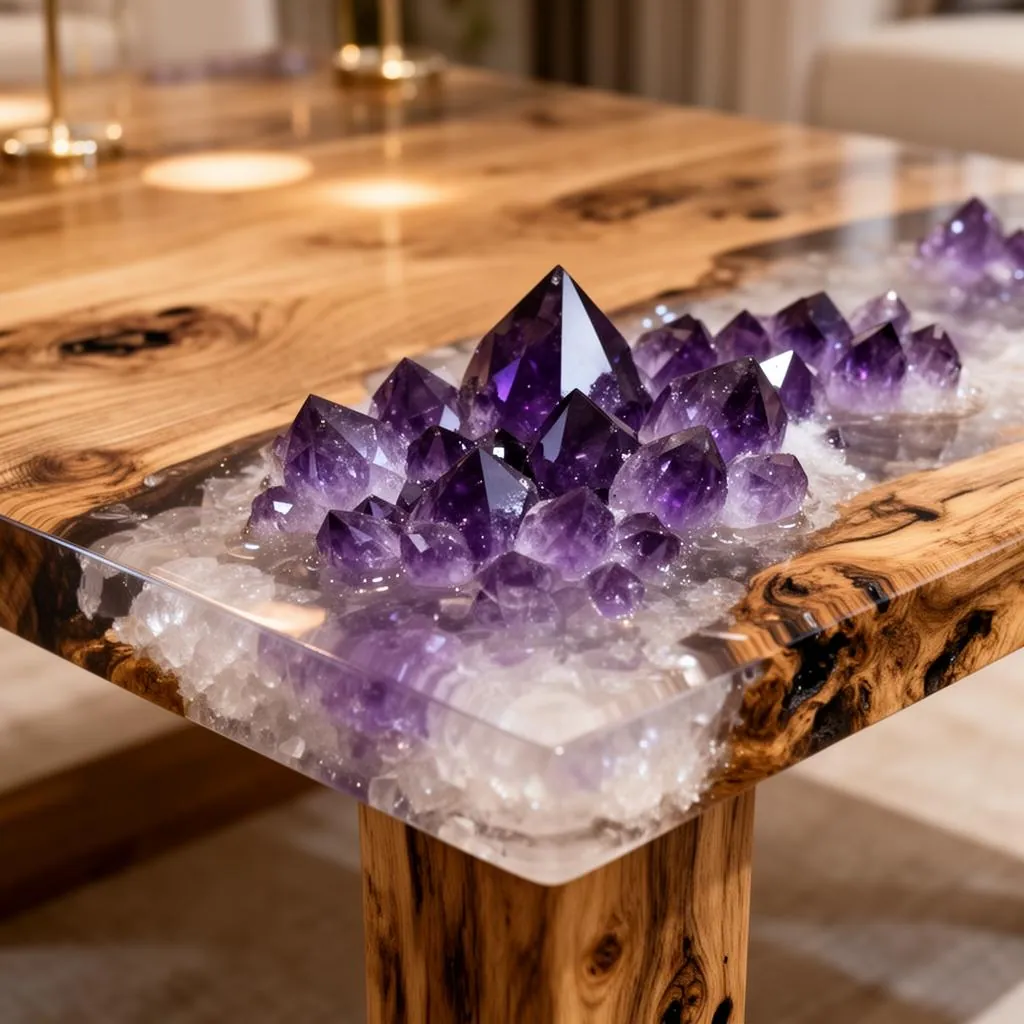
Crystal is selected stone by stone, then set so the light travels through it rather than across it. The pour, the sanding, the oiling and the signature are done by the same hands, start to finish.
The palette
Everything is chosen for how it behaves in twenty years, not how it photographs on day one.
Longleaf pine, 200–300 years old. Dense, resinous, warm — and almost impossible to find new.
White oak, red oak and American chestnut from barns and mills. Chestnut in particular is now essentially extinct as a living species.
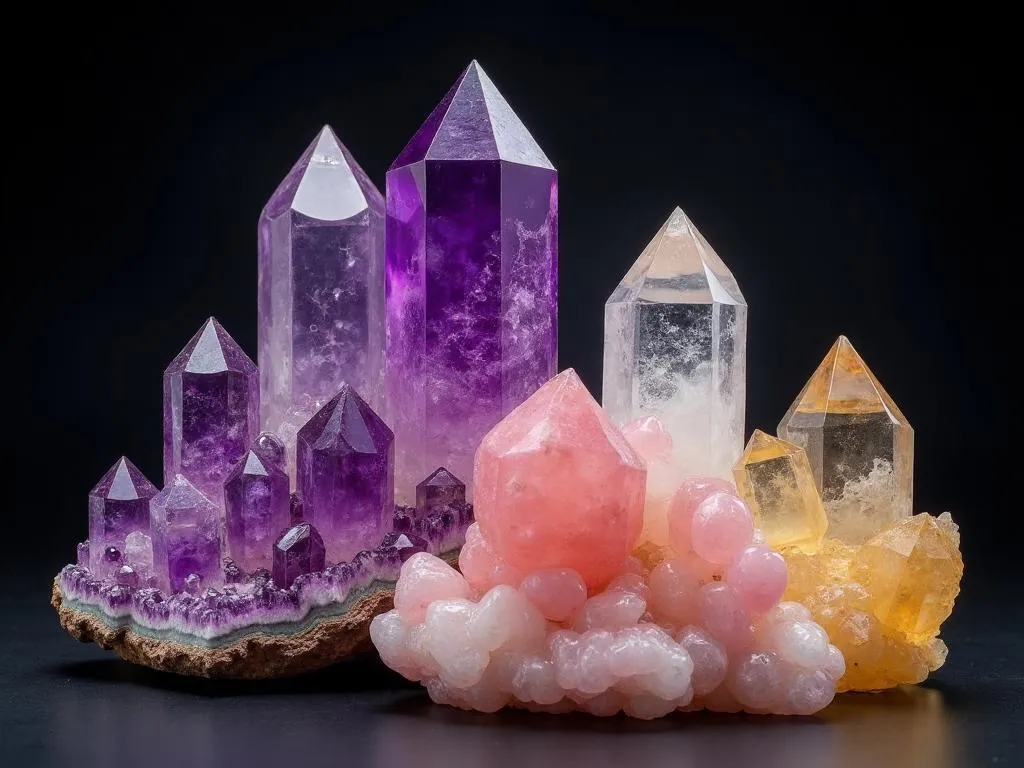
Amethyst, citrine, rose quartz, clear quartz, smoky quartz and selenite — selected for colour and clarity, never crushed.
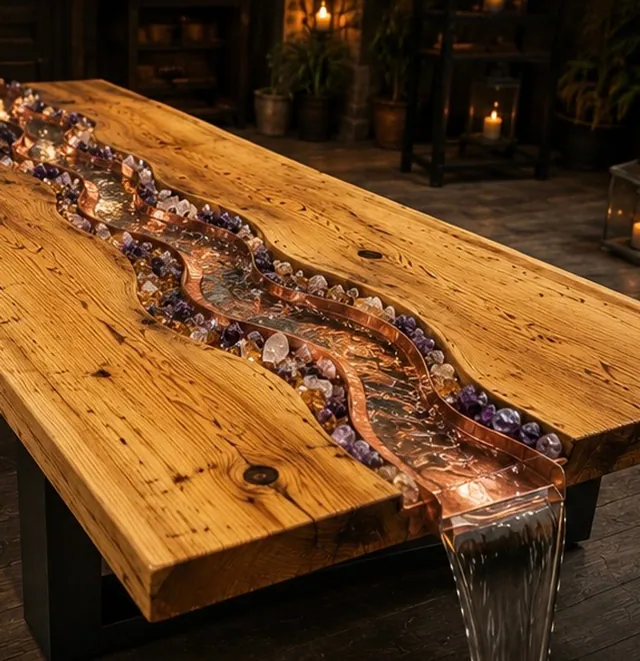
Hand-hammered copper for the rivers; blackened steel for the bases. Both age honestly, and both can be repaired.
Standards
Every slab is kiln-dried to a stable moisture content before it enters the workshop. It is the least romantic part of the job and the reason the table will not move in five years.
Oil finishes rather than plastic lacquers. Mechanical fixings rather than glue where possible. Filters, pumps and LEDs are accessible — a table should outlive its technology.
Each piece leaves with its provenance: the structure the timber came from, the species, the crystal composition, and the date it was finished. Signed on the underside.
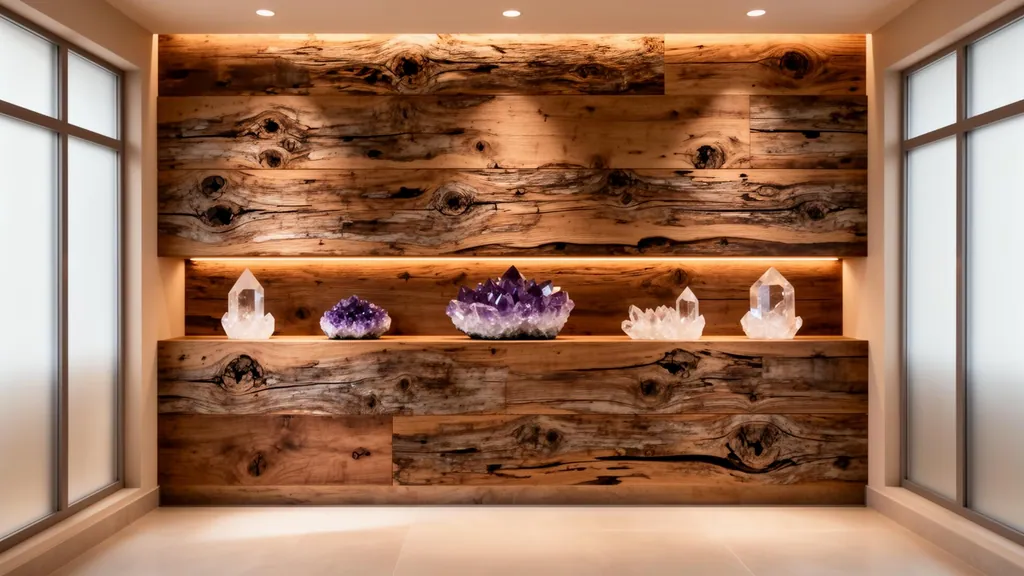
Begin here
Dimensions, a photograph, and something about how you live is enough to start.
We will come back with a slab and a drawing.