HIGHER SELF Living · Miami Commission a table
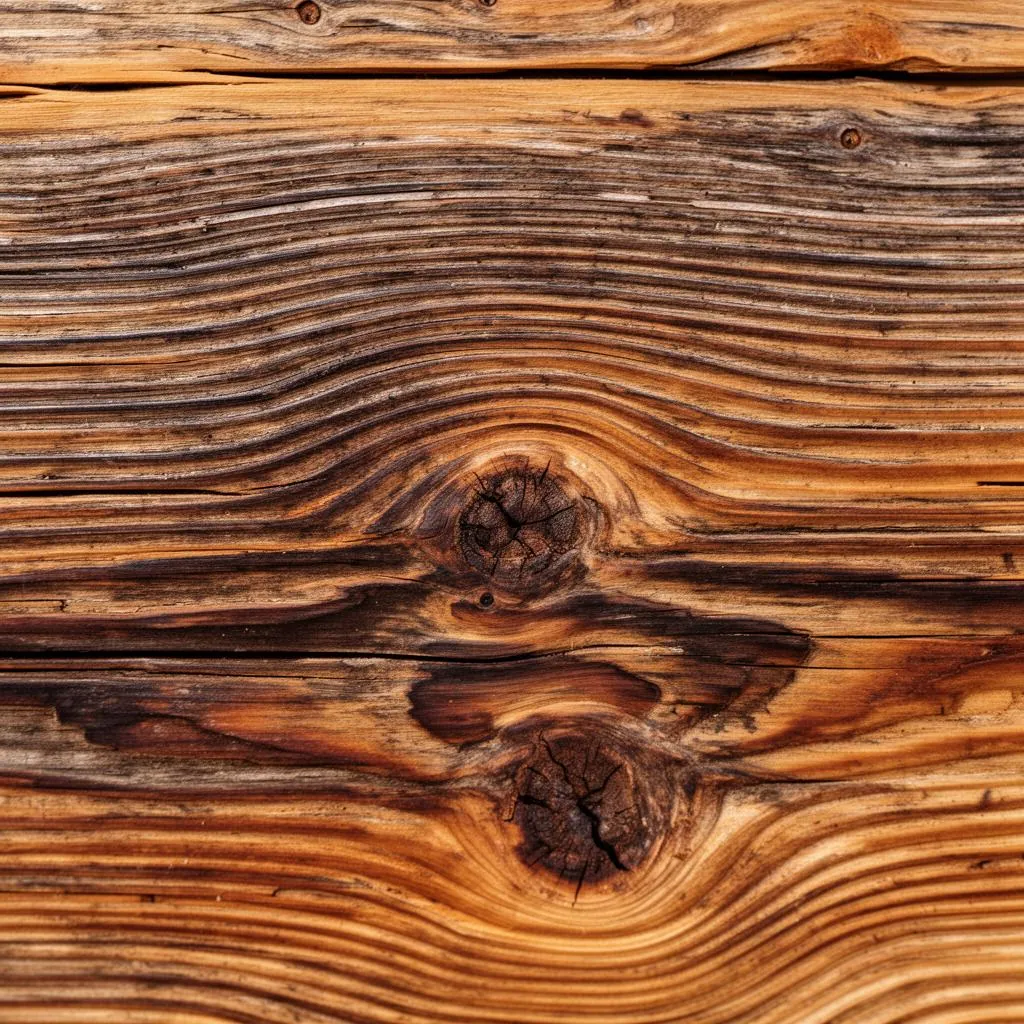
Close-up of the grain of a reclaimed American board

Notes from the atelier

Stories

On wood that predates the country, stone that predates us, and the light that makes both visible.

Spotlight · 11.2026

The First Table

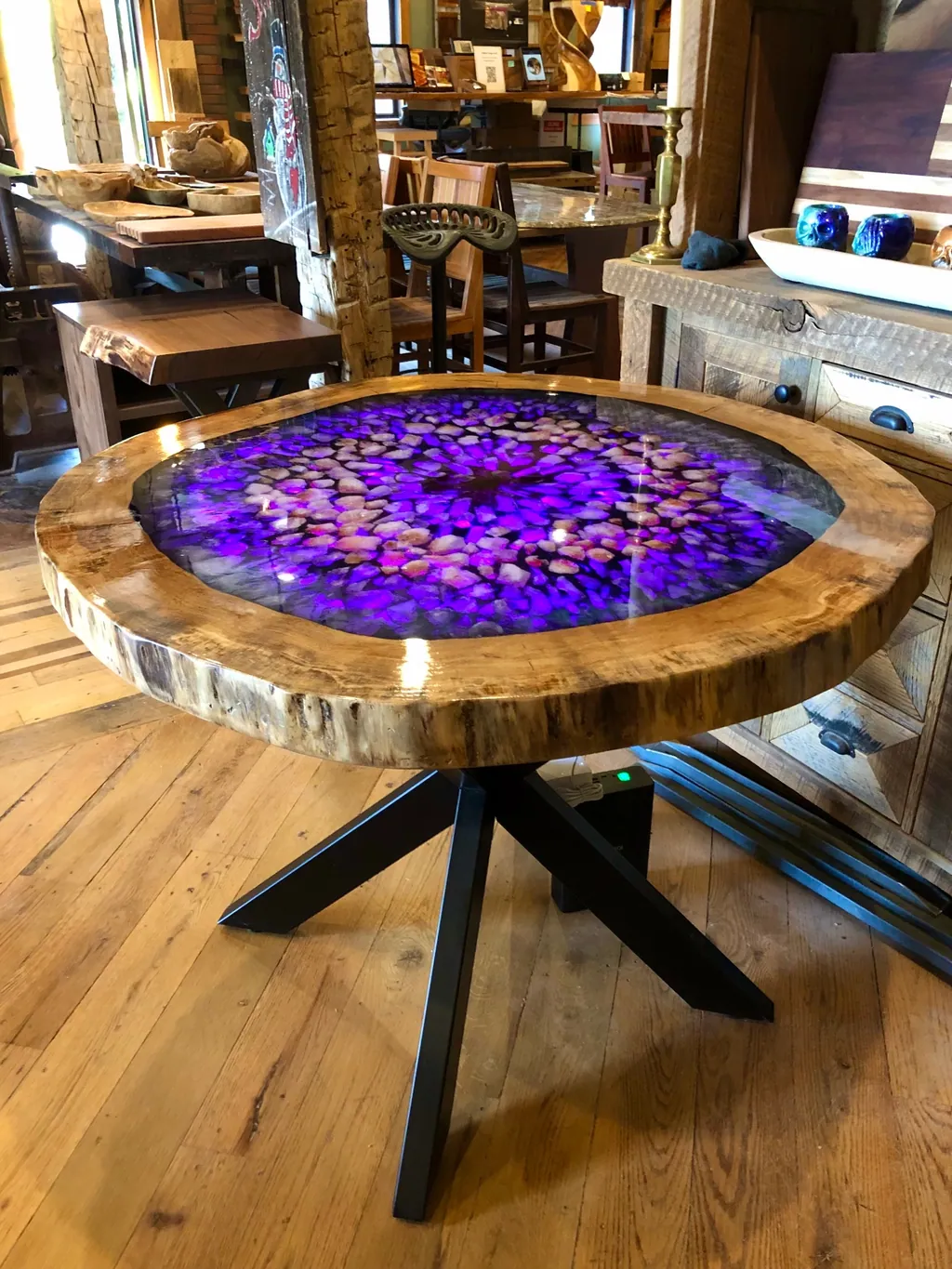
A single slice of ancient acacia, a hand-cast crystalline mandala, and a spiral of light hidden beneath the surface.

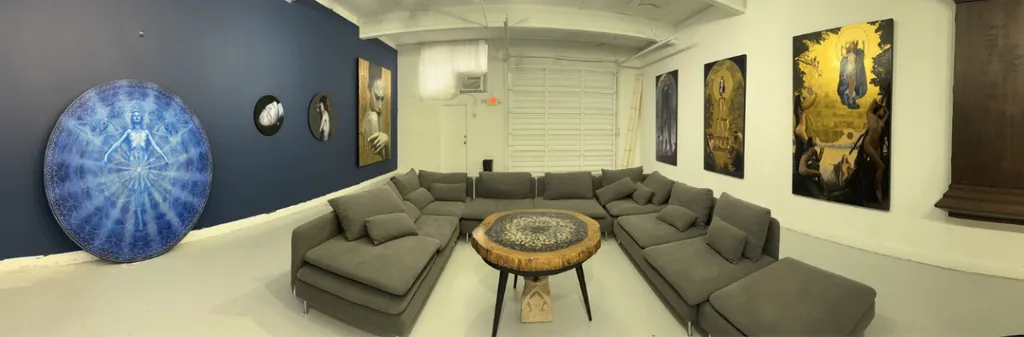
The Mandala Heirloom table beneath a triptych at Adrian's Avila Art Gallery, Miami
The Mandala Heirloom, shown beneath Adrian Avila’s sacred-feminine triptych — Miami, 2026.

Every atelier has one object that explains the rest. For Higher Self, it is this table: a single, rare slice of ancient acacia, rescued from the waste stream and restored rather than remade. Acacia has been revered across civilisations as the Tree of Life — a symbol of endurance, protection and time.

At its centre sits a hand-cast crystalline mandala, set precisely into the grain so the surface stays level to the touch. Smoky quartz grounds the composition. Clear quartz amplifies it. Citrine brings warmth and prosperity; amethyst lifts the whole thing toward something quieter and more intuitive.

Light from below

Underneath, a concealed spiral of LED illumination radiates outward through the stone. By day the table is a sculptural object in wood and mineral. By night it becomes architecture: a low, shifting glow that changes the temperature of the room without a single visible fixture.

It was first shown at Adrian’s Avila Art Gallery in Miami, beneath a triptych of sacred-feminine paintings — which is exactly the right context. This is not a table that asks to be protected. It asks to be experienced.

“Designed not only to be seen, but to be lived around.”

Like every Higher Self piece, the Mandala Heirloom is a one-of-one. There will not be a second. That is the point: the tree took centuries, the stone took longer, and the table took one pair of hands.
The craft · 11.2026

The art of
reclaimed wood

Why a two-hundred-year-old board behaves differently — and why it is worth saving.

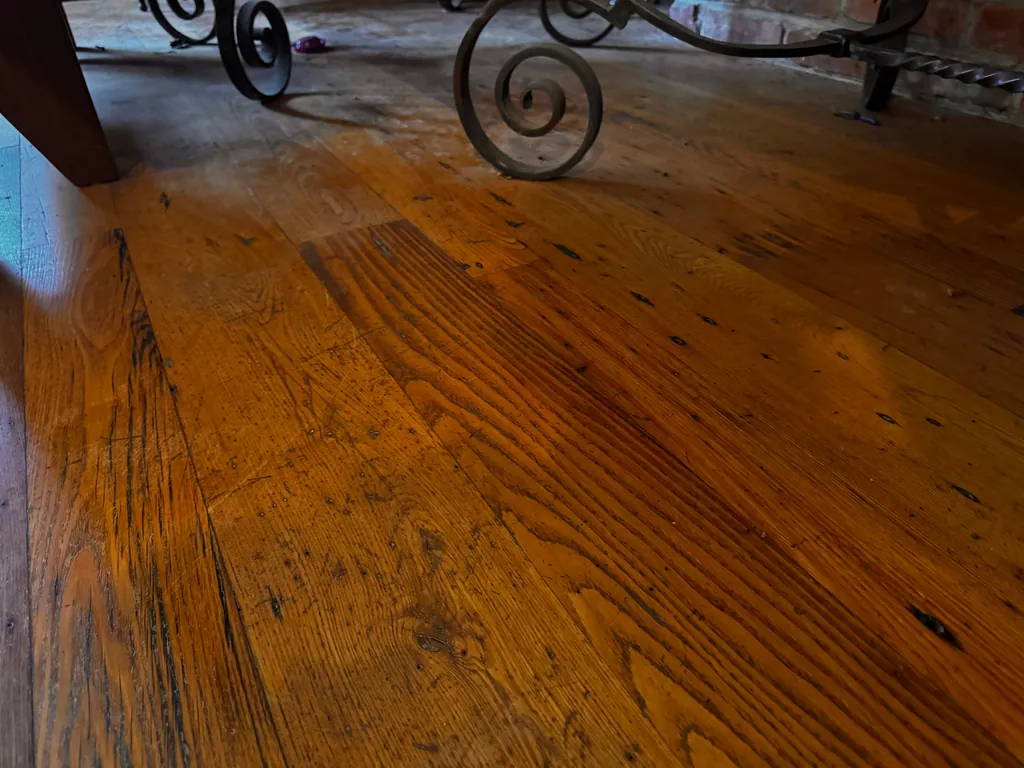
Heart pine floorboards showing tight growth rings and patina
Heart pine, reclaimed from a century-old American structure. The dark bands are resin that took a hundred years to form.

Old-growth American timber is a different material from the wood we buy today. The trees grew slowly in dense forests, competing for light, laying down narrow rings and heavy resin. When you cut it, it smells of turpentine and history. When you plane it, it shines.

Most of it is gone. The longleaf pine forests that once covered the American South were logged to near extinction in the nineteenth century. What remains is inside buildings — barns, mills, warehouses, bridges — and roughly eighty-five per cent of it is still demolished and landfilled.

What we look for

Density first: the tighter the rings, the better the table. Then figure — the way the grain moves, the presence of a burl or a pitch pocket. Then story: a beam from a mill has a different scale than a board from a barn, and the table should suit it.

Through Madison Mountain Reclaimed we select material from historic structures across the eastern United States. Chestnut, in particular, is now effectively extinct as a living species; every chestnut table is, in the most literal sense, unrepeatable.

What we keep

Nail holes stay. Hinge shadows stay. Checking — the fine cracks that open as old timber dries — is stabilised with butterfly keys rather than filled with plastic. A surface with nothing to hide is usually a surface with nothing to say.

“The wood is not the raw material. It is the collaborator.”

The finish is oil, not lacquer: it feeds the timber, can be repaired locally, and will improve with the next twenty years of use. A table should be re-oiled, not replaced.

Material · 11.2026

Crystal, light
& frequency

What the stones actually do in a room — and how we set them for light.

Illuminated crystal table glowing in low light
Backlit crystal at night. The stone is selected for translucency first, colour second.

We are often asked whether the crystals are decorative or functional. The honest answer is that they are both, and that the order matters. A stone that is beautiful but opaque is a decorative element. A stone that transmits light becomes a lamp, a colour field, and a small piece of geology you can put a glass on.

Amethyst gives a cool violet that flatters wood and skin. Citrine warms a room without looking artificial. Rose quartz is softer, almost pink-grey in daylight. Clear quartz is the amplifier: set beneath a surface, it carries light further than any of the others.

How we set it

Each stone is placed dry, photographed, then re-placed until the composition works from every seat. Crystals sit outside the drinking path in the Fountain of Youth, and are sealed beneath a food-safe pour elsewhere. Nothing is crushed or glued into a uniform aggregate — the point is that no two pieces look alike.

Light is set below the stone, never above it, with a dimmer on the circuit. At full power the table is a centrepiece; at ten per cent it is a nightlight for a room that is still being used at midnight.

“The stone does not need to be believed in. It needs to be looked at.”

Whether or not you subscribe to the metaphysics, the physical effect is real: a warm, low, mineral light changes how a room feels, and how long people stay in it. That is the frequency we design for.

Illuminated crystal with amber light beneath a table surface

Next

Bring us the room.

We will bring the slab, the stone and the drawing.